Exotic Bets in Horse Racing: A Data-Driven Guide for UK Punters
 Available in US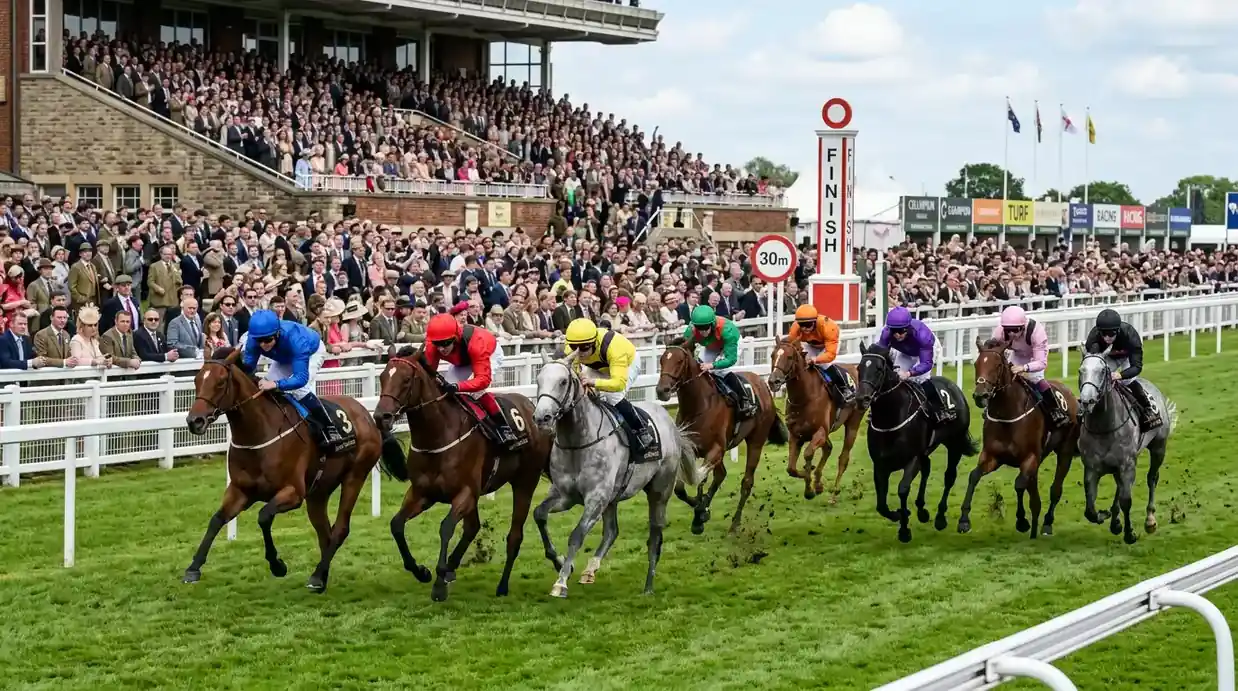
I placed my first exotic bet at Newbury in 2015 — a Tote Exacta on a midweek handicap, backed more by curiosity than conviction. It paid three times what the Computer Straight Forecast returned. That gap between what the pool delivered and what fixed-odds offered was the moment I stopped treating exotic bets as lottery tickets and started treating them as a market. Eleven years later, after thousands of pool wagers across flat and jumps, I can tell you the gap has not closed. If anything, the data shows it is widening.
British horse racing contributes more than 4.1 billion pounds in direct and associated spending to the UK economy each year, and remote betting on the sport alone generated 766.7 million pounds in gross gaming yield over the financial year ending March 2025. Those are enormous numbers — and yet the vast majority of punters confine themselves to win and each-way singles. They never touch the exotic pools where structural value lives. This guide is built to change that.
What you will find here is not the usual “an Exacta picks the first two in order” primer recycled across every affiliate site on the internet. I have pulled together real payout data, Tote pool statistics, World Pool dividend comparisons, and regulatory context that none of the top-ranking guides bother to include. The aim is simple: give UK punters a genuinely useful, data-driven framework for understanding and exploiting exotic bets in horse racing — from Placepot perms to Trifecta value edges to the international liquidity revolution happening through the World Pool.
Whether you have been betting for decades and never ventured beyond a win single, or you placed your first Placepot last Saturday and want to understand what happened to your money, this is where the numbers meet the racecard.
Table of Contents
- The Numbers That Should Change How You Bet on UK Racing
- What Exotic Bets Are and How They Differ From Straight Wagers
- Every Exotic Bet Type Available to UK Punters
- Pool Betting vs Fixed-Odds: Where the Value Sits
- Boxing, Wheeling and Permutations: Controlling Cost and Coverage
- World Pool: How International Liquidity Changes the Exotic Game
- The UK Betting Market and Why Exotic Pools Are Gaining Ground
- A Practical Exotic Bet Strategy Framework
- Frequently Asked Questions About Exotic Bets
The Numbers That Should Change How You Bet on UK Racing
- Tote Trifecta dividends beat Computer Straight Tricast payouts by an average of 26% across 1,011 UK races — a structural edge, not a fluke.
- World Pool turnover at Royal Ascot 2025 hit 150 million pounds, with Exacta outpaying CSF in 23 of 35 races and Trifecta beating Tricast in 24.
- The average Placepot dividend is 407 pounds from a typical 2-pound stake — the UK’s most popular exotic bet rewards analytical selection, not luck.
- Boxing costs escalate exponentially: a 5-horse Trifecta box costs 60 pounds, a 7-horse box costs 210 pounds. Structure your exotics before you pick your horses.
- UK betting turnover on racing has fallen 9% year on year, but Tote revenue has grown 56% since 2019. Dead money in pools is increasing, not shrinking.
What Exotic Bets Are and How They Differ From Straight Wagers
| Characteristic | Straight Bets | Exotic Bets |
|---|---|---|
| Selection requirement | One horse to win or place | Multiple horses, often in exact finishing order |
| Payout mechanism | Fixed odds or SP (bookmaker sets price) | Pool/pari-mutuel (punters set the price collectively) |
| Typical minimum stake | Varies by bookmaker | Often as low as 1 pound per line on the Tote |
| Risk profile | Lower variance, lower ceiling | Higher variance, significantly higher ceiling |
| Who profits from errors | The bookmaker | Every other punter in the pool |
The first time someone tried to explain exotic bets to me, they said “it’s like a win bet, but harder.” That is roughly as useful as describing a chess match as “a board game, but harder.” The distinction is not difficulty — it is structure, and that structural difference is where all the value hides.
A straight bet — win, place, each-way — asks one question: will this horse finish where I need it to? You pick a horse, a bookmaker quotes you a price, and that price is locked. The bookmaker has already built their margin into the odds. Your upside is capped from the moment you click “place bet.” An exotic bet asks a fundamentally different question: can you identify a relationship between multiple horses in a race, or across several races? The answer is rewarded through a pool, not a bookmaker’s book. Every pound staked by every punter goes into a shared pot, the operator takes a commission, and the remainder is divided among winning tickets. The price you receive is not set by a trader — it is set by the collective intelligence (and collective ignorance) of the entire market.
Pari-mutuel — a betting system where all stakes go into a pool, the operator deducts a fixed commission, and the net pool is shared among holders of winning tickets. Also called pool betting or Tote betting in the UK context.
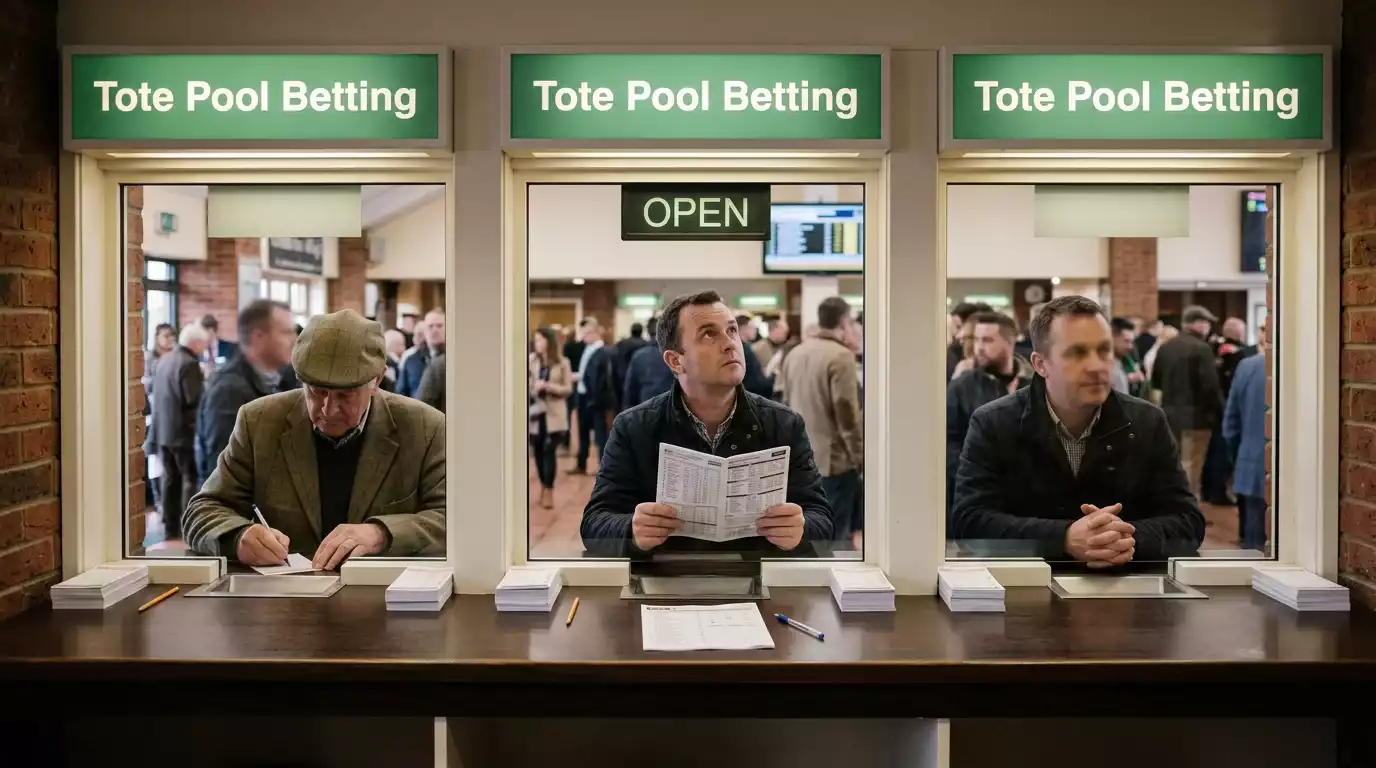
This distinction matters more than most punters realise. Horseracing is deeply interlinked with the gambling sector — it remains one of the most recognised and popular betting products in Britain, with around 4% of the population placing a bet on racing in any given month. Yet the overwhelming majority of those bets are straight wagers placed with fixed-odds bookmakers. The exotic pools, by contrast, attract a smaller but more committed crowd — and crucially, they also attract a significant volume of what professionals call “dead money”: stakes placed by casual or uninformed bettors whose selections inflate the payout for everyone else.
Dead money — stakes placed by casual or uninformed bettors in a pool. Because these bets are often poorly constructed, they inflate the dividends available to more analytical punters.
In a fixed-odds market, a bookmaker adjusts prices to protect their margin. In a pool, nobody adjusts anything. If half the money in a Trifecta pool is backing the wrong combinations, that money does not disappear — it gets redistributed to the winners. This is the core economic argument for exotic betting, and it is one I will keep returning to throughout this guide.
There is a terminology split in the UK that trips up newcomers. British racing traditionally uses “forecast” (picking the first two in order) and “tricast” (first three in order), while the Tote and international pools use “Exacta” and “Trifecta.” They describe the same bet — but the payout mechanisms differ, and those differences are worth real money. I will unpack the UK-specific terminology as each bet type comes up, because getting the language right is the first step toward getting the betting right.
Every Exotic Bet Type Available to UK Punters
I spent my first year of exotic betting convinced there were about four types. Exacta, Trifecta, Placepot, done. Then I discovered the Swinger had no fixed-odds equivalent at all, that the Scoop6 carried a bonus pool rolling over from week to week, and that World Pool Quinella markets sometimes held more money than the Win pool at Royal Ascot. The landscape is broader than most guides suggest, and each bet carries its own risk-reward profile, cost structure, and strategic logic.
UK punters have access to two families of exotic bets: single-race exotics, where you predict finishing positions within one race, and multi-race exotics, where you link selections across several races on the same card. Both families are available through the Tote and, for certain bet types, through bookmakers offering Computer Straight Forecast and Tricast markets. The table below maps the full range before I break each family down.
Single-Race Exotics
Exacta (Forecast) — Trifecta (Tricast) — Superfecta — Quinella (Reverse Forecast) — Swinger
Predict finishing positions within one race. Payouts scale with the difficulty of the order you are predicting.
Multi-Race Exotics
Placepot — Scoop6 — Jackpot — Daily Double — Pick 3/4/6
Link selections across multiple races. Payouts scale with the number of legs and the unpredictability of results.
Single-Race Exotics: Exacta, Trifecta, Superfecta, Quinella, Swinger
The Exacta — called a forecast in traditional UK betting language — requires you to pick the first two finishers in exact order. It is the gateway exotic: simple enough to grasp, complex enough to reward genuine form analysis. On the Tote, your Exacta stake enters a pool, and the dividend is determined by how much money backed the winning combination versus the total pool after commission. Through a bookmaker, the equivalent bet is the Computer Straight Forecast, calculated by an algorithm based on starting prices. The two products settle the same outcome, but the payout mechanisms differ — and as the data in the pool-versus-fixed section shows, that difference consistently favours the Tote in competitive fields.
Exacta / Forecast — a bet requiring the first two finishers in exact order. “Exacta” is the Tote/international term; “forecast” or “CSF” (Computer Straight Forecast) is the bookmaker equivalent.
The Trifecta — a tricast in bookmaker parlance — extends the challenge to the first three home in exact order. This is where the numbers start getting serious. An analysis of 1,011 UK races found that the Tote Trifecta paid on average 26% more than the Computer Straight Tricast, with the pool version delivering the bigger payout in four out of every five races. That is not a marginal edge. For a detailed breakdown of why this gap exists and when it widens, the Exacta, Trifecta and Superfecta guide has the full data.
The Superfecta demands the first four in exact order — a brutally difficult bet, but one that produces eye-watering dividends in large fields. A 12-runner handicap has 11,880 possible Superfecta combinations. Even a small pool generates enormous payouts when only one or two tickets land.
The Quinella — or reverse forecast — is the Exacta’s friendlier sibling. You pick two horses to finish first and second in either order. It halves the difficulty and roughly halves the payout, but it opens the door for punters who have a strong view on which two horses will fight out the finish without a strong view on which one will prevail. In World Pool markets at Royal Ascot, Quinella pools attracted nearly 2 million pounds more than the Win pools — a signal that sophisticated international bettors see serious value in this market.
Exacta vs Quinella: a cost comparison
Suppose you fancy Horse A and Horse B to fill the first two places. A straight Exacta on A first, B second costs 1 pound. To cover both orders with Exactas, you need 2 pounds. A single Quinella covering both orders costs 1 pound. The Quinella is cheaper but pays less, because more tickets in the pool will match the winning combination.
The Swinger is the exotic that most guides either ignore or misunderstand. Unique to pool betting, it requires two selections to finish in the first three places — in any order. There is no fixed-odds equivalent. None. No bookmaker offers a Swinger market because the calculation does not map onto their pricing models. In South Africa, where pool betting culture runs deeper, the Swinger accounts for 40% of pool turnover. In the UK, it remains underexplored — which, for analytical bettors, is precisely what makes it interesting.
Multi-Race Exotics: Placepot, Scoop6, Jackpot, Daily Double
Multi-race exotics tie selections across several races into a single pool. They are the long-haul flights of exotic betting: more legs, more turbulence, but the destination can be extraordinary.
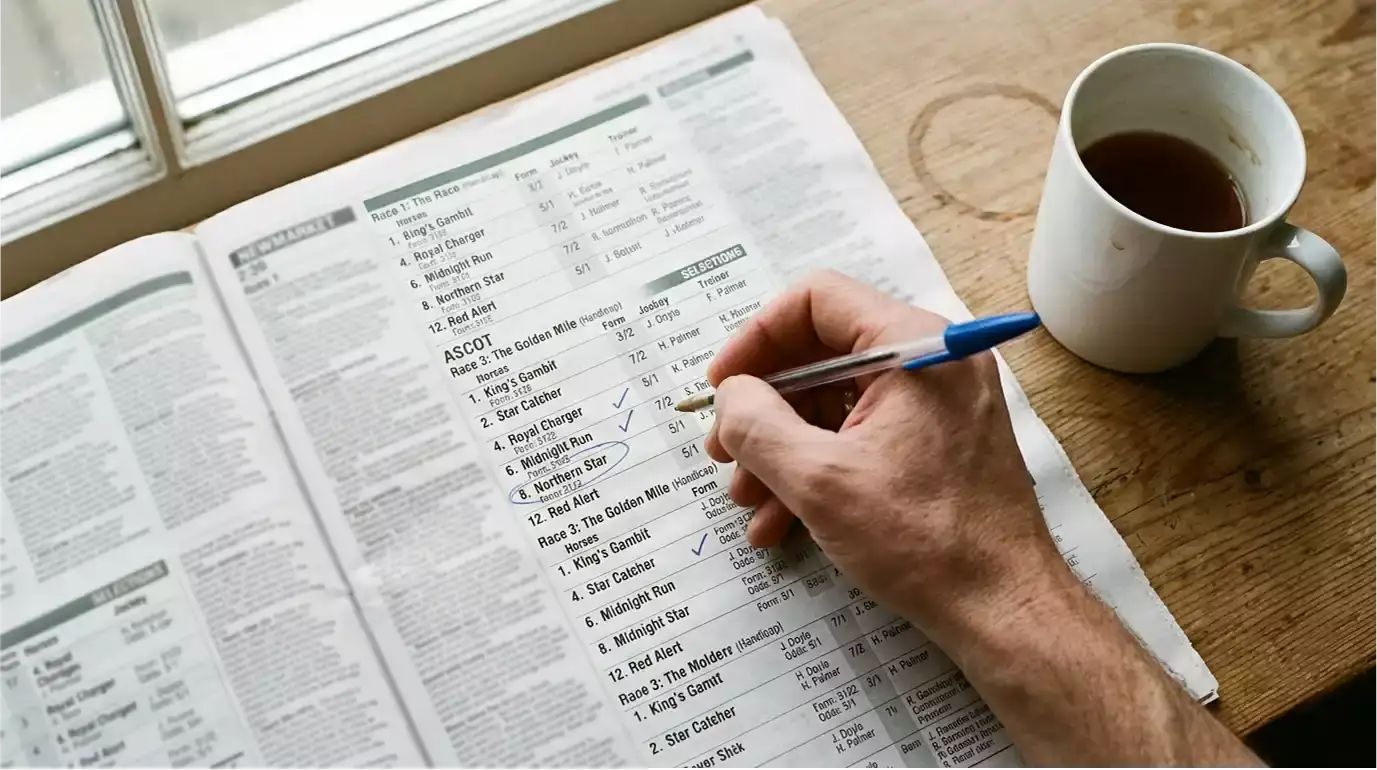
The Placepot is the single most popular exotic bet in British racing. You pick a horse to place (finish in the frame under normal place terms) in each of the first six races on a card. All six must place for you to collect. The average Placepot dividend is 407 pounds, and the record stands at 182,567.80 pounds from a 2-pound unit on day three of the Cheltenham Festival in 2019. As Tote’s Head of Racing, Kev Matthews, put it: “Days like this are what the Tote Placepot is all about — a small stake can lead to a life-changing return.” The Placepot betting guide covers structure, perm costs, and festival strategies in depth.
Placepot
6 races, pick a horse to place in each
Average dividend: 407 pounds | Record: 182,567.80 pounds
Scoop6
6 races, pick the winner of each (Saturday only)
Win Fund + Bonus Fund (rolls over weekly)
Jackpot
6 races, pick the winner of each
Record: 1.5 million pounds from a 2-pound stake
The Scoop6 raises the bar: you must find the winner of six nominated races, typically on a Saturday. It carries a separate bonus fund that rolls over when unclaimed, creating pools that swell across weeks. The Jackpot follows similar principles — six winners from six races — but its rollover mechanism and consolation dividend structure differ. The record Jackpot payout belongs to Steve Whiteley, who turned a 2-pound stake at Exeter in March 2011 into 1.5 million pounds. It remains the largest single pool betting win in British history.
The Daily Double is the simplest multi-race exotic: pick the winner of two consecutive races. It works as a pool equivalent of a bookmaker accumulator double, but because the payout is pool-determined rather than fixed, the value proposition shifts depending on how the money flows into the pot. For a broader view of multi-leg pool bets, including Pick 3, Pick 4, and Pick 6 formats, the architecture of multi-race exotics follows the same principles — more legs, more combinations, more variance, and a bigger pool to share when you get it right.
Knowing the bet types is step one. Step two is understanding which payout mechanism delivers better returns — and the data on that question is unambiguous.
Pool Betting vs Fixed-Odds: Where the Value Sits
A punter I respect once told me he only bets exotics on the Tote “because the bookmakers are smarter than the crowd, but the crowd is dumber than the bookmakers think.” It is a glib line, but the data supports the logic more than you might expect.
The case for pool betting over fixed-odds in exotic markets rests on three pillars: dividend superiority in specific bet types, the absence of a bookmaker adjusting prices against you, and the structural inefficiency created by dead money. Let me take each in turn.
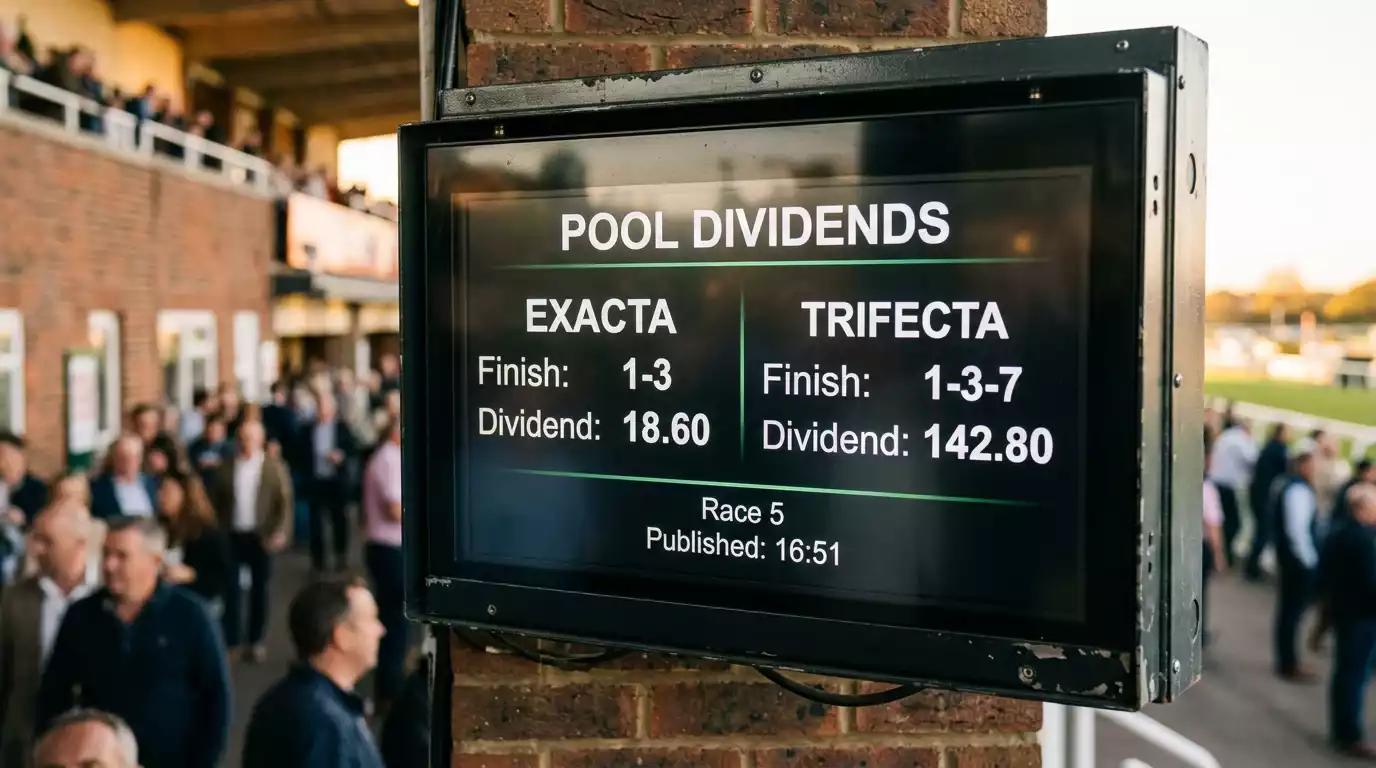
First, dividends. At Royal Ascot 2025 — the flagship UK flat meeting and the biggest pool betting week of the year — the World Pool Win dividend exceeded Starting Price in 20 out of 35 races. That is a meaningful edge on simple win bets. But the gap widens dramatically in exotic markets. The Tote Exacta beat the CSF Forecast in 23 of those 35 races, and the Tote Trifecta outpaid the Computer Straight Tricast in 24. When you move from ordering one horse to ordering three, the pool’s advantage over the algorithm becomes structural, not incidental.
| Bet Type | Pool Beat Fixed-Odds (Royal Ascot 2025) | Proportion |
|---|---|---|
| Win (World Pool vs SP) | 20 out of 35 races | 57% |
| Exacta (Tote vs CSF) | 23 out of 35 races | 66% |
| Trifecta (Tote vs CST) | 24 out of 35 races | 69% |
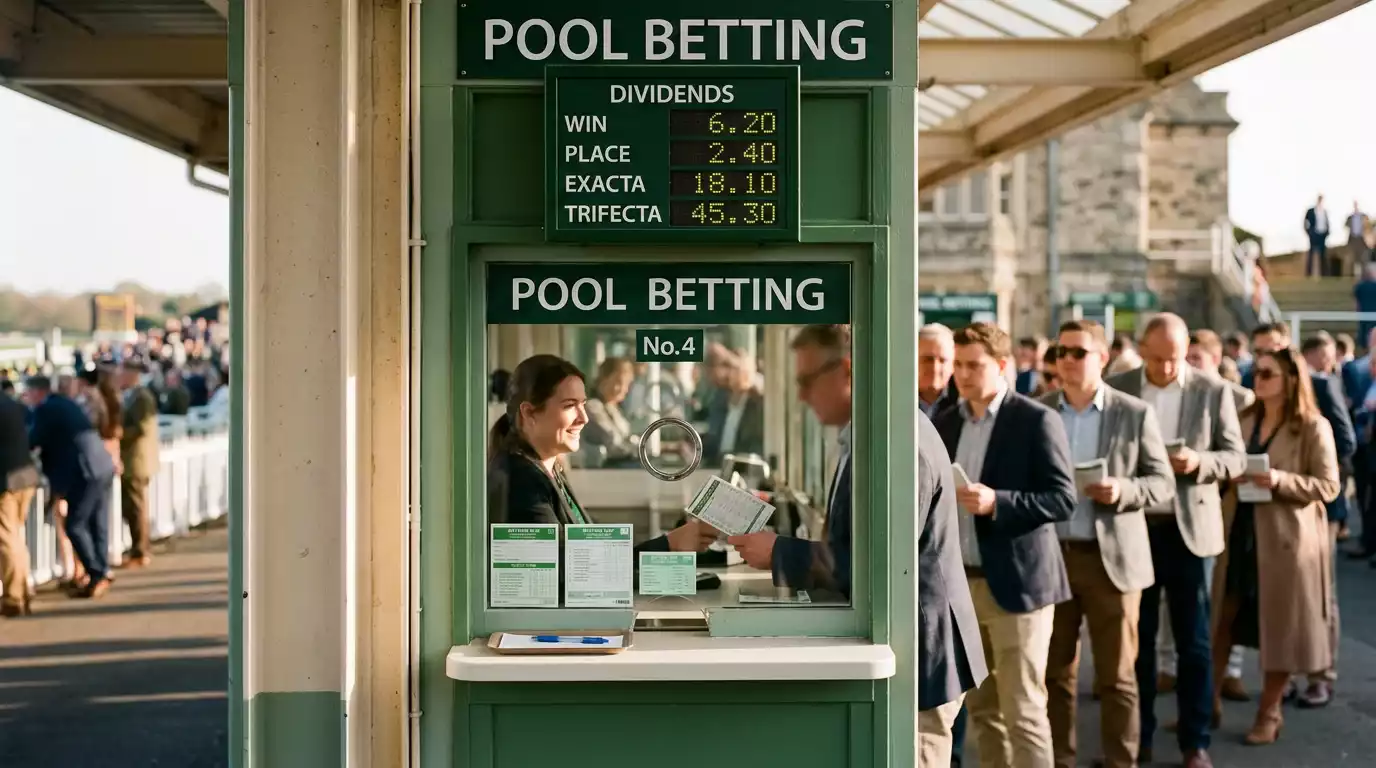
Second, the pricing mechanism. A fixed-odds bookmaker employs traders whose job is to ensure the book never loses. They shade prices on popular runners, widen the overround when they sense liability, and restrict accounts that win consistently. The Tote does none of this. The pool is a passive mechanism: money goes in, commission comes out, the rest gets divided. Nobody is watching your account. Nobody is cutting your stakes. Alex Frost, the CEO of UK Tote Group, has been direct about the model’s appeal: “There’s no racing jurisdiction in the world that isn’t backed by a successful pool. So there is plenty of material evidence that an effective pool in the UK is very important.”
Third, the dead money effect. In a win pool, large professional bets tend to correct pricing errors relatively quickly — if a horse is overlaid, sharp money pushes the price down. But as Racing Post’s betting editor Keith Melrose observed, “Even when the high-rollers correct a price in the win pool, the error tends to persist in the exotics.” This happens because exotic pools are combinatorial: a Trifecta pool on a 12-runner race has 1,320 possible outcomes, and casual bettors cannot cover them efficiently. Their poorly distributed stakes remain in the pool as value for anyone constructing their exotic bets analytically.
The wider the pool’s combinatorial space, the longer pricing errors persist. This is why the Trifecta’s 26% average payout advantage over the Tricast — documented across 1,011 UK races — is not an anomaly. It is a structural feature of how pool markets work. A thorough exploration of when and why Tote exotic bets outperform fixed-odds equivalents is worth your time if you are serious about making pool betting a core part of your approach.
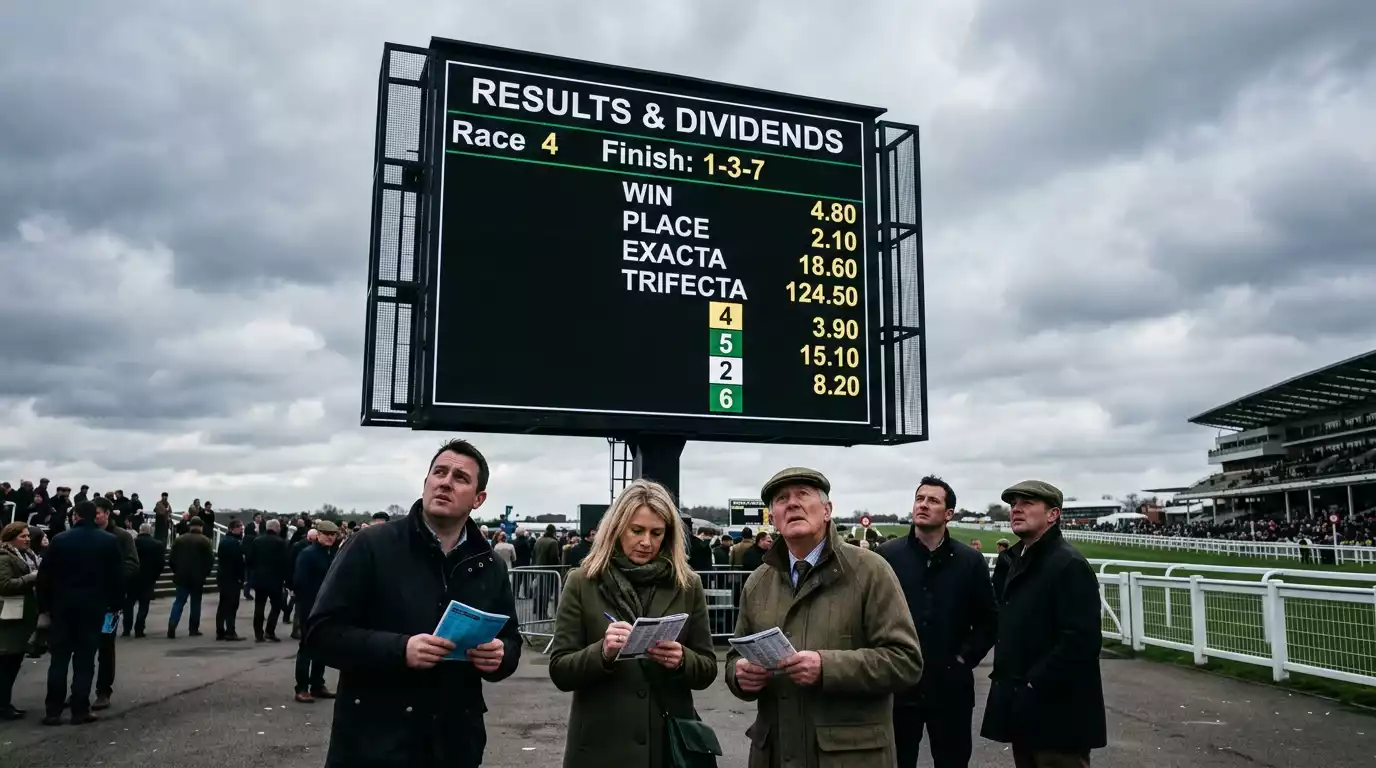
None of this means pool betting is always superior. In short-priced markets with small fields, the bookmaker’s CSF can match or beat the Tote Exacta. And Tote commission — ranging from 16.5% to 19% depending on the bet type — eats into returns in a way that a competitive fixed-odds price does not. The point is not that pools always win; it is that in the right conditions (large fields, deep pools, competitive races), they win often enough and by enough margin to make exotic bets a genuinely distinct value proposition for UK punters.
Boxing, Wheeling and Permutations: Controlling Cost and Coverage
The first Trifecta box I ever placed cost me 48 pounds. I had boxed six horses in a midweek handicap at Kempton, confident that my selections would fill the first three places. They did not. But even if they had, I had spent 48 pounds to win a dividend that might have paid 60. That was the day I learned the most expensive lesson in exotic betting: coverage without cost discipline is a fast route to negative expected value.
Three tools control the cost of exotic bets — boxing, wheeling, and permutations. Each trades coverage for cost in a different way, and understanding the maths behind them is essential before you place anything more complex than a straight Exacta.
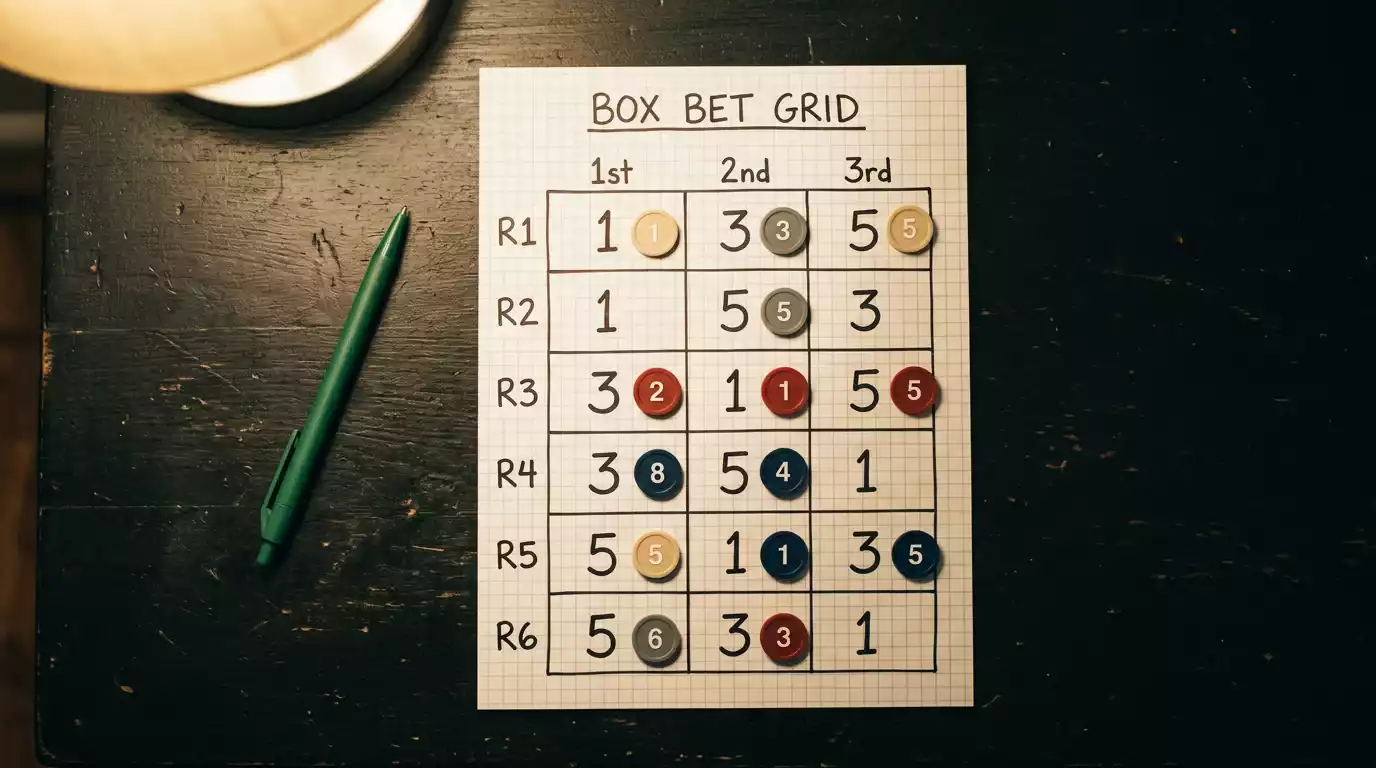
Boxing means covering all possible finishing orders for a group of selected horses. If you box three horses in an Exacta, you cover all six possible first-second combinations (3 x 2 = 6 bets at your unit stake). Box four horses in a Trifecta and you are covering 24 combinations (4 x 3 x 2 = 24). The numbers escalate fast.
Trifecta box costs at a 1-pound unit stake
3 horses: 3 x 2 x 1 = 6 combinations = 6 pounds
4 horses: 4 x 3 x 2 = 24 combinations = 24 pounds
5 horses: 5 x 4 x 3 = 60 combinations = 60 pounds
6 horses: 6 x 5 x 4 = 120 combinations = 120 pounds
7 horses: 7 x 6 x 5 = 210 combinations = 210 pounds
You can see the problem. By the time you are boxing seven horses in a Trifecta, you are spending 210 pounds per unit. The dividend needs to be substantial just to break even, and in smaller pools it often will not be.
Wheeling offers a smarter approach when you have one strong opinion and less certainty about the rest. A full wheel keys one horse in a specific position (say, first) and pairs it with every other runner in the field for the remaining positions. A part-wheel keys one horse and pairs it with selected runners only, cutting costs further. This is where conviction pays: if you are 80% sure a horse wins but have no view on second and third, wheeling that horse in first and spreading the rest is far more cost-efficient than boxing five or six runners.
Full wheel vs box: a cost comparison
Suppose you are betting a Trifecta in a 10-runner race. You key Horse A to win and wheel all remaining 9 runners for second and third: 9 x 8 = 72 combinations at 1 pound = 72 pounds. Compare that with boxing 5 horses (which includes Horse A) without a key: 5 x 4 x 3 = 60 combinations = 60 pounds. The full wheel costs more but covers every possible second-third combination behind your key. The box is cheaper but only covers five runners in any position. The right choice depends on how much confidence you have in Horse A specifically winning, versus finishing in the top three somewhere.
Permutations apply primarily to multi-race exotics like the Placepot and Scoop6. A perm is the total number of bet lines created when you select more than one horse in one or more legs. Select 2 horses in each of 6 Placepot legs and your perm is 2 x 2 x 2 x 2 x 2 x 2 = 64 lines. At a 1-pound unit stake, that is a 64-pound Placepot. Add a third selection to just one leg and your perm jumps to 96 lines. The multiplication is relentless.
For detailed formulas, cost tables covering 4 to 8 selections, and guidance on when boxing makes sense versus keying or part-wheeling, the dedicated guides go deeper than this overview can. The principle to carry forward is simple: every additional horse you add to an exotic multiplies your cost. The discipline lies in knowing when broader coverage improves your expected value and when it just inflates your outlay.
World Pool: How International Liquidity Changes the Exotic Game
Royal Ascot 2025 broke records. Not attendance records or prize money records — pool betting records. Total World Pool turnover across the five-day meeting hit approximately 150 million pounds, a 10% increase on 2024. The single-day record fell on the Wednesday card, when 330.7 million Hong Kong dollars (roughly 33 million pounds) flowed through the World Pool in 24 hours. Alex Frost called the meeting “absolutely exceptional,” and the numbers justified every syllable.
The World Pool is a co-mingled international pool operated in partnership with the Hong Kong Jockey Club. Instead of UK punters betting into a domestic Tote pool of a few hundred thousand pounds, their stakes are merged with bets placed in Hong Kong, Australia, Japan, South Korea, and other major racing jurisdictions. The result is a pool of a scale that domestic UK betting cannot match — and that scale changes the economics of exotic betting in ways that matter.
Bigger pools mean more stable dividends and less distortion from a single large bet. They also mean more dead money from international recreational punters who follow different form lines, creating pricing inefficiencies that UK specialists can exploit.
The growth trajectory tells the story. World Pool turnover at Royal Ascot has surged from 18 million pounds in 2018 to 92 million by 2023, before the introduction of Superpools pushed it past the 150-million mark. That is an eightfold increase in seven years. The exotic markets have been the primary beneficiary: at Royal Ascot, nearly half of all World Pool bets go into Exacta (Quinella) and Swinger pools — more money than flows into the Win pool itself.
At Royal Ascot 2025, Quinella pools held nearly 2 million pounds more than the Win pools. International bettors, particularly from Hong Kong, favour exotic markets with a conviction that most UK punters have not yet matched.

For UK punters, the practical implication is straightforward. At meetings where the World Pool operates — Royal Ascot, the major Festival days, selected Premier fixtures — your exotic bets enter a pool with international depth. The Trifecta dividend at these meetings reflects global money, not just domestic stakes. And the data shows it pays: Trifecta dividends exceeded domestic Tricast returns in 24 of 35 races at Royal Ascot 2025. The World Pool betting guide covers which UK fixtures offer access, how to bet into the pool, and the dividend patterns that create the strongest value opportunities.
The UK Betting Market and Why Exotic Pools Are Gaining Ground
Here is a number that should concern anyone who cares about British racing: total betting turnover on UK horse racing fell 9% in the first quarter of 2025 compared with Q1 2024. That is not a blip. Since 2022, online turnover has dropped by 1.6 billion pounds in real terms — closer to 3 billion when adjusted for inflation. The average turnover per race on core fixtures declined 14.4% year on year. Richard Wayman, the BHA’s Director of Racing, acknowledged the scale of the problem: “Whilst there is work to be done on the racing product to grow its appeal as a betting medium, there would be a much wider range of factors contributing to this concerning decline.”
The Horserace Betting Levy Board collected a record 108.9 million pounds from bookmakers in the financial year ending March 2025 — the highest since the levy reform of 2017. This sounds like good news until you realise that the levy is calculated on bookmaker profits, not turnover. Bookmakers can report strong profits even as overall betting volume shrinks, particularly after a run of results that favoured the layers. Alan Delmonte, the HBLB’s CEO, captured the paradox: “With Levy income having risen for a fourth consecutive period, it may seem counter-intuitive that the Board continues to express caution about the sustainability of this trend.”
Several forces are compressing the market simultaneously. The Gambling Commission introduced financial vulnerability checks in August 2024, initially triggered at 500 pounds per month, then lowered to 150 pounds from February 2025. The intent — protecting vulnerable gamblers — is legitimate. The side effect has been to push an alarming proportion of higher-staking punters toward unregulated offshore operators. A Racing Post survey of 10,000 punters found that one in three bettors staking 1,000 pounds or more per transaction had used an unregulated site in the previous 12 months. Meanwhile, Remote Gaming Duty rises from 21% to 40% from April 2026, a tax increase that will reshape operator economics.
Against this backdrop of declining turnover and regulatory pressure, Tote revenue has grown 56% since 2019. Pool betting is gaining ground precisely because the forces squeezing fixed-odds bookmakers — tighter regulation, higher tax, account restrictions — do not apply in the same way to a pari-mutuel operator. Nobody’s Tote account gets restricted for winning.
What does this mean for exotic pool bettors? Two things. First, as fixed-odds turnover contracts, the relative importance of pool betting to British racing’s financial ecosystem grows. A healthy Tote means healthier prize funds, which means better racing, which means deeper pools. Second, the regulatory environment is funnelling more recreational money into Tote pools — punters who would rather avoid the friction of affordability checks with a traditional bookmaker are finding the Tote an increasingly attractive alternative. More recreational money in the pool means more dead money. More dead money means bigger dividends for analytical bettors.
Attendance data reinforces the optimism. British racecourses welcomed 5.031 million visitors in 2025 — the first time the 5-million mark had been breached since 2019. Under-18 attendance climbed 17% to 211,447. New audiences are coming through the gates. When they get there, the Placepot and other on-course pool bets are among the first exotics they encounter. The funnel from curiosity to participation is shorter than it has ever been.
A Practical Exotic Bet Strategy Framework
I used to approach exotic bets the way most people do: pick my fancies, box them, hope for the best. My strike rate was respectable; my return on investment was atrocious. The turning point came when I stopped thinking about exotic bets as “harder win bets” and started thinking about them as a separate market with its own set of exploitable inefficiencies. What follows is the framework I use now — not a rigid system, but a decision tree that forces me to ask the right questions before I commit a penny to any pool.
Start with the race, not the bet. Not every race is suitable for an exotic wager. Maiden races with several unexposed runners produce chaotic finishes that resist analysis. Short-field conditions races with a 1/5 favourite produce tiny dividends that rarely justify the stake. The sweet spot for single-race exotics — Exacta, Trifecta, Superfecta — is a competitive handicap or a field of 8 to 16 runners with genuine pace dynamics. At Royal Ascot 2025, the races that produced the largest Trifecta dividends were almost exclusively handicaps with double-digit fields. The exotic bet strategy guide breaks down race shape analysis, field-size filters, and pace dynamics in detail that goes well beyond what I can cover here.
Decide your structure before your selections. Are you boxing, keying, wheeling, or playing a straight? This decision should be made before you look at the form, because it determines your budget. If your session budget is 30 pounds and you want to play a Trifecta, you cannot afford to box five horses (60 combinations at 1 pound = 60 pounds). You can key one horse and wheel four others (4 x 3 = 12 combinations = 12 pounds), or you can box three horses (6 combinations = 6 pounds) and use the remaining budget for a second race. Structure first, selections second.
Before placing any exotic bet
- Field size: is the race large enough for the exotic type I am considering? (8+ for Exacta, 10+ for Trifecta, 12+ for Superfecta)
- Race type: does this race have enough competitive depth for the finishing order to be unpredictable enough to generate a meaningful dividend?
- Pool depth: is there enough money in the pool for the dividend to be worthwhile? (Check Tote pool sizes before betting, especially on midweek cards)
- Cost control: have I calculated the exact cost of my selected structure — box, key, or wheel — and does it fit within my session budget?
- Conviction gradient: do I have a strongest selection that should be keyed, or is my opinion genuinely spread across multiple contenders?

Exploit the dead money, do not contribute to it. The entire economic case for exotic pool betting rests on the idea that uninformed stakes inflate dividends. But you can only exploit dead money if your own selections are analytically grounded. Every randomly added “saver” horse to your Trifecta box is you becoming the dead money. The discipline is counterintuitive: the fewer runners you include, the higher your potential payout per pound staked. A tight, well-reasoned three-horse Trifecta box costs 6 pounds and pays the full dividend if you land it. A six-horse box costs 120 pounds and dilutes your return per unit by a factor of 20.
Treat multi-race exotics as separate decisions per leg. The Placepot is six individual place assessments, not one bet. I assign each leg a confidence rating: “banker” legs get one selection, “spread” legs get two or three. The aim is to keep total perm costs under control while concentrating spend on the legs where I have the least certainty. The Placepot that paid 26,424.30 pounds on the Friday of Royal Ascot 2025 — from a pool of 479,524.83 pounds — was won by punters who correctly identified the right combination of favourites and longshots across six races. That is not luck. That is structured analysis applied across multiple decisions.
Size your stakes to survive variance. Exotic bets are high-variance instruments. You will lose more often than you win, and the wins need to cover the losses with margin to spare. I allocate no more than 10% of my weekly betting budget to exotic wagers, and within that allocation, no single exotic bet exceeds 3% of my total bankroll. These numbers are personal — your risk tolerance may differ — but the principle is universal: if a losing run on exotics threatens your ability to bet next week, you are staking too much.
The framework above is a starting point. The detailed guides on race shape analysis, bankroll sizing, and dead money exploitation go much deeper — but every one of those guides assumes you have internalised the fundamentals covered here.
Frequently Asked Questions About Exotic Bets
What are exotic bets in horse racing and how do they differ from straight bets?
Exotic bets require you to predict multiple outcomes — either the finishing positions of several horses in one race (single-race exotics like the Exacta, Trifecta, or Superfecta) or the results of multiple races linked together (multi-race exotics like the Placepot or Scoop6). Straight bets — win, place, each-way — ask only whether one horse will finish in a specified position. The key structural difference is the payout mechanism: most exotic bets are settled through a pool (pari-mutuel) system, where all stakes are collected, a commission is deducted, and the remainder is divided among winning ticket holders. This means no bookmaker sets your price — the market of fellow punters determines the dividend. Exotic bets carry higher variance than straight wagers, but they also carry higher payout potential and, in many conditions, a structural value edge over fixed-odds equivalents.
What is the easiest exotic bet for beginners?
The Placepot is the most accessible entry point. You pick one horse to place in each of the first six races on a card — you do not need to find winners, just horses that finish in the frame. The minimum unit stake is typically 1 pound, and even a simple 1x1x1x1x1x1 Placepot (one selection per leg) costs just 1 pound. The average dividend of 407 pounds means the potential return is significant relative to the stake. If you want a single-race exotic to start with, the Quinella (two horses to finish first and second in any order) is forgiving because it removes the need to predict exact order. Both are available through the Tote website and through bookmakers offering Tote pool access.
How are exotic bet payouts calculated in pool betting?
The calculation follows a straightforward sequence. First, all stakes for the bet type are collected into a gross pool. Second, the Tote deducts its commission — between 16.5% and 19% depending on the bet type — to produce the net pool. Third, the net pool is divided by the number of winning unit stakes. The result is the dividend, expressed as a return to a 1-pound stake. If a Trifecta pool totals 50,000 pounds, commission at 19% leaves a net pool of 40,500 pounds, and if 30 winning 1-pound units exist, the dividend is 1,350 pounds per unit. The dividend cannot be known before the race because it depends on total stakes and the number of winning tickets — both of which are determined only when the pool closes.
What is the difference between a forecast and a Tote Exacta?
Both bets require you to name the first two finishers in exact order, but they are settled differently. A Computer Straight Forecast (CSF) is offered by bookmakers and calculated algorithmically based on the Starting Prices of the placed horses — the payout is determined by a formula, not by a pool of bets. A Tote Exacta is settled through the Tote pool: all Exacta stakes form a pot, commission is deducted, and the remainder is divided among winning tickets. In practice, the Tote Exacta frequently pays more, particularly in competitive races with larger fields. Data from Royal Ascot 2025 showed the Exacta outpaying the CSF in 23 of 35 races. The terminology is purely regional: “forecast” is the traditional British bookmaker term, “Exacta” is the Tote and international pool term.
Can you box an exotic bet and how much does it cost?
Yes. Boxing means covering all possible finishing orders for your selected horses. The cost depends on the bet type and the number of horses. For an Exacta box: multiply the number of horses by the number minus one (n x (n-1)), then multiply by your unit stake. Three horses boxed in an Exacta = 3 x 2 = 6 units. For a Trifecta: n x (n-1) x (n-2). Four horses boxed in a Trifecta = 4 x 3 x 2 = 24 units. For a Superfecta: n x (n-1) x (n-2) x (n-3). Five horses boxed in a Superfecta = 5 x 4 x 3 x 2 = 120 units. Costs escalate rapidly, so alternatives like wheeling (keying one horse in a fixed position) or part-boxing can provide targeted coverage at lower cost.
What is the Tote Placepot and why is it the UK’s most popular exotic bet?
The Tote Placepot requires you to pick a horse to place in each of the first six races at a meeting. All six selections must place for you to collect a share of the pool. Its popularity rests on three factors: low minimum stake (typically 1 pound per line), dramatic payout potential (the average dividend is 407 pounds, with the record exceeding 182,000 pounds), and accessibility — you do not need to find winners, only placed horses. The Placepot also creates a natural engagement arc across the card: even casual racegoers become invested in every race when they have a stake running through six legs. The combination of affordability, narrative appeal, and genuinely life-changing upside has made it the cornerstone of UK pool exotic betting.
Are exotic bets better value on the Tote or with fixed-odds bookmakers?
In the majority of conditions, pool betting offers better value for exotic wagers. Analysis of 1,011 UK races showed the Tote Trifecta paid an average of 26% more than the Computer Straight Tricast, with the Tote version delivering the larger payout in four out of five cases. The advantage is most pronounced in competitive handicaps with large fields and at festival meetings where pool sizes are deepest. Fixed-odds equivalents can match or beat the Tote in short-field races with strong favourites, where the algorithmic CSF or CST produces a similar result to the pool dividend. As a general rule: the more combinatorial complexity a bet involves and the more runners in the field, the more likely the Tote pool is to deliver superior returns.
Created by the ”Exotic Bets Horse Racing” editorial team.